10-Jul-2026
Author: Navin Harjwani
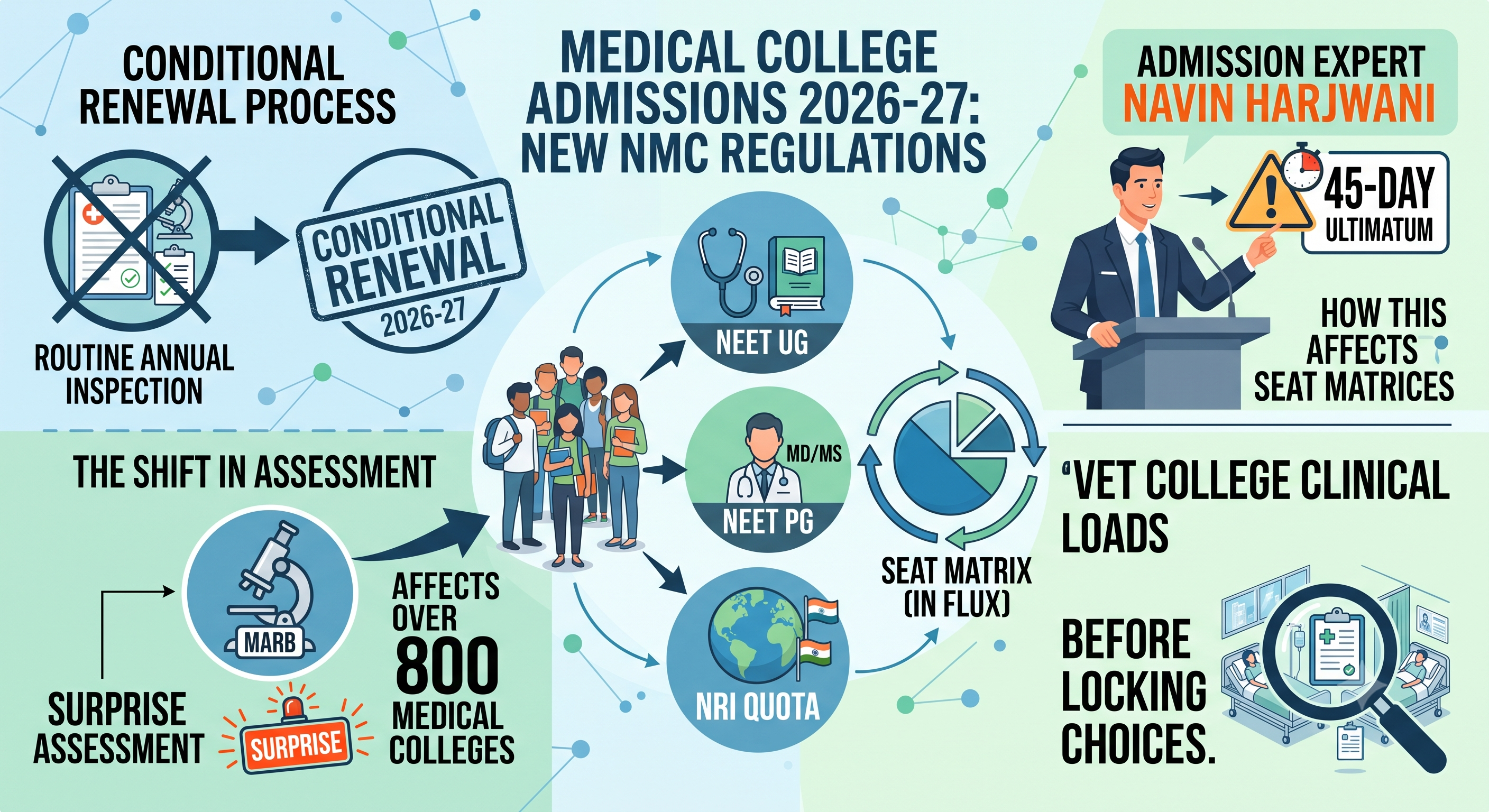
The medical admissions landscape in India is undergoing a massive regulatory shift. The National Medical Commission (NMC) has officially issued conditional renewal letters for MBBS and PG seats to over 800 medical colleges across the country for the 2026-27 academic session.
If you are a NEET UG or PG aspirant, or a parent navigating the upcoming counseling cycles, this structural change will directly impact how you evaluate and select your prospective colleges this year.
Historically, medical colleges prepared for scheduled, mandatory annual inspections before they were permitted to admit students. The NMC’s Medical Assessment and Rating Board (MARB) has now scrapped that predictable model.
Under the new standardized framework:
Conditional Renewals: Colleges are allowed to proceed with the admission process on schedule, preventing delays in the academic calendar.
The 45-Day Ultimatum: Institutions have been given a strict 45-day window to rectify any existing deficiencies in infrastructure, faculty availability, or clinical load.
Surprise Assessments: The NMC will now conduct continuous physical, virtual, or hybrid surprise assessments year-round.
The message from MARB is clear: temporary compliance just for inspection day is no longer enough. Colleges must maintain prescribed standards 365 days a year.
In my 19 years of guiding students through the complexities of medical admissions, I’ve seen regulatory shifts come and go, but this continuous oversight model introduces a new layer of strategy for college selection.
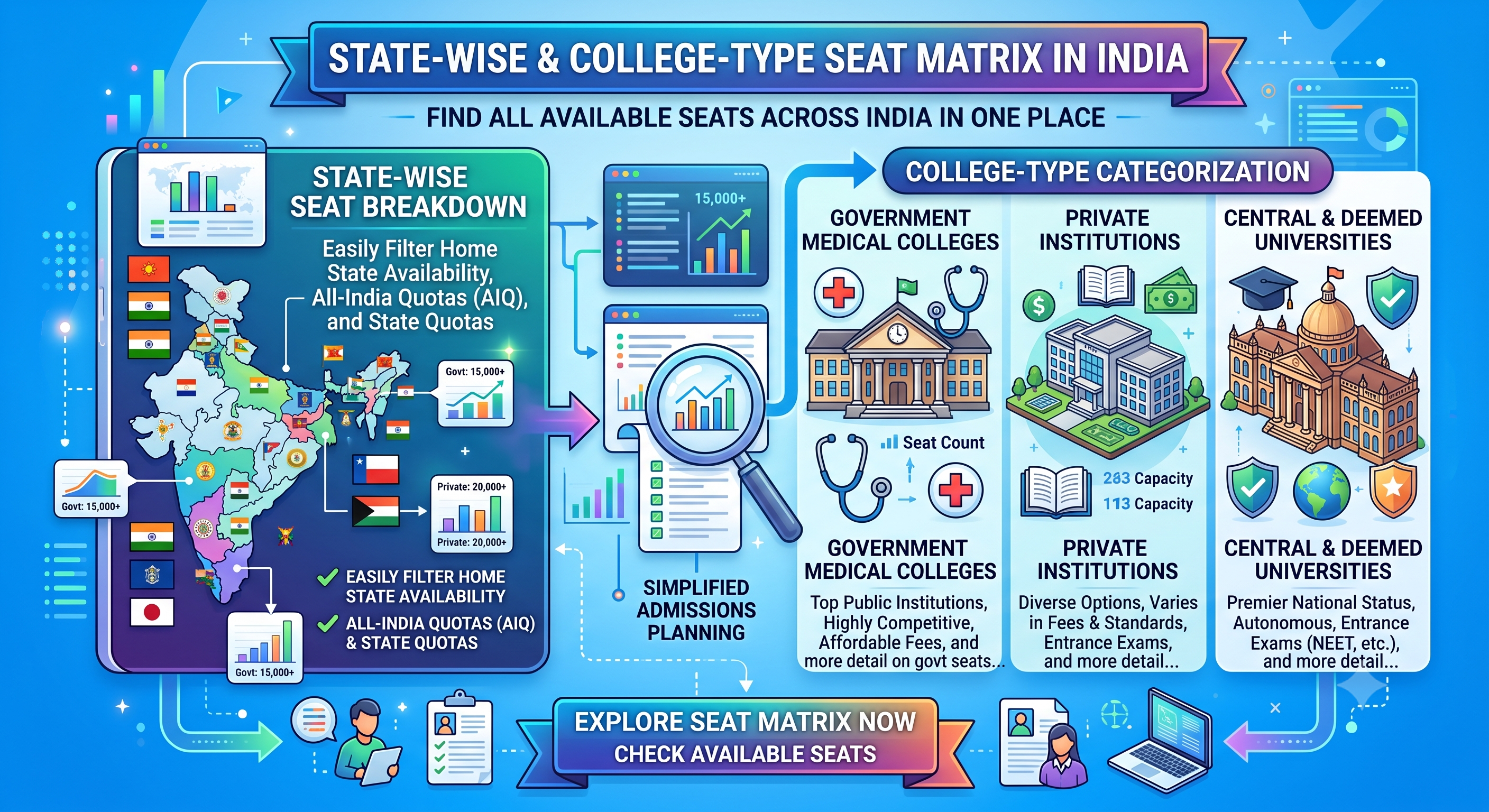
The good news is that the conditional approvals ensure the seat matrix is available early, and the admission process won't be stalled waiting for final inspection clearances.
While conditional approval gets colleges onto the counseling roster, it is not a free pass. If a college fails a surprise MARB assessment later in the year, they face severe penalties, including a reduction in student intake, withdrawal of seats, or suspension of future admissions.
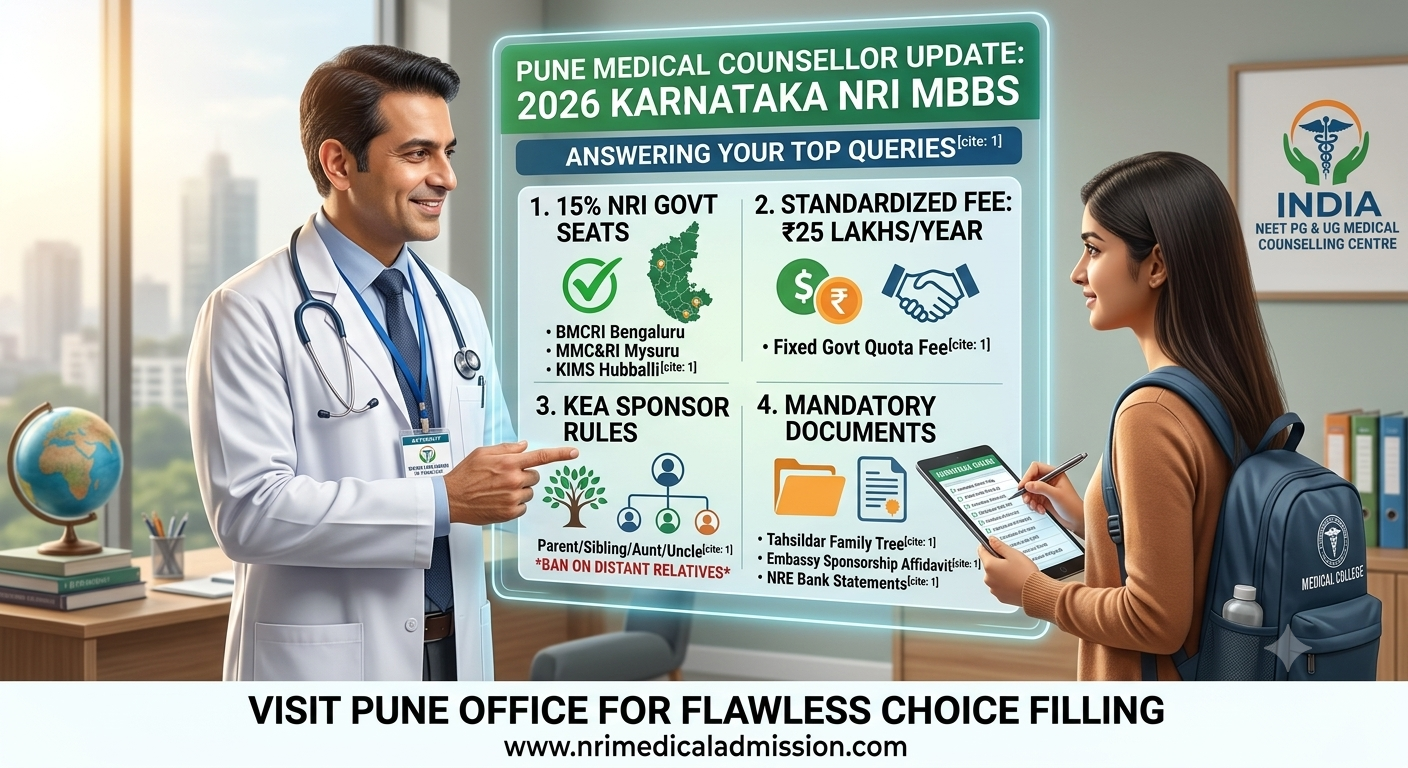
For families targeting NRI and Management quota seats—a landscape we monitor constantly over at the NEET PG NRI Admissions Hub—this change requires extra vigilance. When a private or deemed university faces regulatory action or seat reductions due to poor continuous compliance, the competition and cutoff dynamics for the remaining management seats can shift dramatically overnight.
Do not assume that every college appearing in the seat matrix is a perfectly safe bet. Now, more than ever, you need to look beyond the basic NMC approval status.
When shortlisting colleges, you must evaluate the institution's true operational health:
Faculty Retention: Are they maintaining robust teaching staff year-round, or do they struggle with shortages?
Clinical Load: Does the hospital have genuine, consistent patient footfall to satisfy surprise clinical assessments?
Infrastructure Upgrades: Are they actively investing in their campus and clinical facilities?
Navigating this takes precise data. As we head into the 2026-27 cycle, I highly recommend using tools like our NEET UG Allotment Navigator to track historical college performance, closing ranks, and institutional reliability before locking in your choices. The NMC is raising the bar for medical education in India. Make sure the college you choose is ready to clear it.
07-Aug-2026
30-Jul-2026
22-Jul-2026
21-Jul-2026
20-Jul-2026